
Some of the links below are affiliate links and as such, I earn a small commission from purchases that allow me to continue telling you my stories without costing you anything extra.
Mosquito Bay in Vieques, Puerto Rico is known as the brightest bioluminescent bay in the world. When we ironed out our plans for our recent trip to Puerto Rico, I made reservations for our kayaking tour to experience the bay right away. While we were getting ready to board the ferry to Vieques, Chris asked me when our tour was, and I discovered that I booked our tour for the day after we arrived back on the Puerto Rican mainland. I quickly logged on to Viator to see if I could find another tour with availability. Luckily, I was able to find a tour with availability, but it wasn’t with the highly-rated tour company I had originally booked with.
We did a bioluminescent bay tour in Fajardo, in mainland Puerto Rico on our previous trip to the island. We enjoyed the evening paddle through the mangroves, but the bioluminescence experience was underwhelming. On that trip, we met our guide at a beach in Fajardo, we hopped in our kayaks and paddled into the bio-bay. In Vieques, the experience was a little different. Our guide picked us up in the town of Esperanza, crammed us into a rickety van, and drove without speaking to a pitch-dark parking lot where we stood in the mud waiting for someone to tell us what to do (remember, this was not one of the highly rated bio-bay tour companies).’
Eventually, a guide showed up and started directing us where to go. We ended up being the first in our group to get into a kayak. We sat down, paddled away from the shore, and immediately we saw the water light up. Our guide took us to the middle of the bay where we got time to explore this light-up water phenomenon on our own. We could see the fish, stingrays, and maybe even sharks swimming beneath us because the water glowed when they moved. It was an incredible experience, unlike anything I had ever seen before. Words and photos do not do it justice.
This bioluminescent bay is heavily protected because chemicals on our skins and in boat motors will kill the dinoflagellates that cause the water to glow. Swimming and gas-powered motors are not allowed in the bay. The only way to see it is by kaya with a licensed guide. The area is also protected from light pollution. There are not many streetlights near the bay and the ones that are nearby have red lights instead of white.
Overall, the transportation to the bay on our tour left something to be desired, but once we got out of the water, it was an unforgettable experience. It is a must-do if you are visiting Vieques, and if you are planning a longer stay on the Puerto Rican mainland, I recommend you plan a night in Vieques, just to see the bio bay. I recommend this highly-rated tour that we had originally booked on Viator, not the one we ended up on.
Thanks for stopping by! Check out our NEW Go See Do Explore Podcast, available wherever you listen to podcasts. To read more about our time in Puerto Rico, check out my Circle Tour of the Island. To read about some of our previous trips, visit my Trips Page. If you like my photos be sure to “like” my Facebook Page and follow me on Instagram! For my list of gadgets to make your travels easier, click here. To see inside my camera bag, check out my Gear Page.
Pin This:


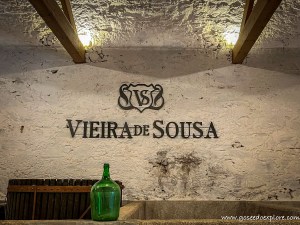 The first stop on our tour was at Viera de Sousa, a 5th-generation family-owned and operated winery, growing grapes on 4 quintas in the Douro Valley. The current generation running the winery are women which is uncommon in Portugal. Here we learned a lot about the difference in Portuguese wines. Traditional Port is a sweet, fortified wine made of a blend of grapes (common Port Wine grapes include Touriga Nacional, Tinta Roriz (AKA Tempranillo), and at least 50 others). White port is typically more fruit-forward and less sweet than other port varieties. Tawny Port is aged at least 2 years in barrels before going into the bottle and typically has flavors of caramel and nut on top of the fruit flavors. Ruby Port is fruit-forward, sweet, and meant to be drunk young. After the wine ages in a barrel for two years, a sample can be sent off to the Institute of Douro and Porto Wine for an assessment, and if a wine is of high enough quality it can be declared for a Vintage where it will be aged in bottles for at least 15 more years. Therefore, Vintage Port is the most expensive and distinguished wine of the Douro Valley. At Viera de Sousa we sampled some of their still wines as well as a white port (which I had never had before), a Tawny, and a Ruby. Their wines were wonderful and their ports were very different than the mass-market port we have in the U.S.


